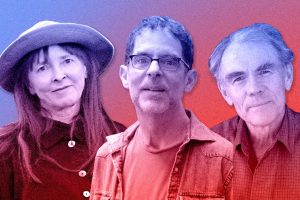
Amy Keenan-Amago (Ph.D. ’26) has spent her entire adult life finding new ways to bring art to people.
After earning her master’s degree in Art Education, she taught across three states, in classrooms, museums, art centers and her own home studio, teaching every grade level and every kind of learner. When she had children and stepped back from full-time teaching, she kept going, finding creative ways to stay connected to students and the practice she loved.
Through it all, one ambition stayed with her: she wanted to earn her Ph.D. and train the next generation of art educators. When she began exploring programs, VCUarts stood out. She enrolled in 2018, and what she discovered here would reshape everything she thought she knew about who art is for.
Keenan-Amago taught a course called “Art for the Exceptional Learner,” which prepares art educators to teach students with disabilities or those with special capacities for learning. The course gave her the opportunity to research the intersection of art education and disability rights, including working directly with adults who have developmental disabilities. Part of the course was a practicum conducted in partnership with the Henrico Day Program, giving participants dedicated time and space to make art.
Keenan-Amago never intended to establish an art studio. She has loved artmaking since she was a child and completed her undergraduate education in studio art and psychology at the University of California, San Diego. Her life was full: she was a doctoral student at VCU School of the Arts, deep into research on art education and disability rights and searching for a place to do an externship. What she found in Charlottesville at the Arc of the Piedmont, a nonprofit founded in 1954 that provides services and advocacy to individuals with developmental disabilities, changed the course of her work and the lives of dozens of artists who never knew they were one.
“Best job on earth,” she says, without hesitation. “I feel privileged every day that I get to do this.”
Keenan-Amago, who graduated with her Ph.D. in art education in May 2026, opened The Arc Studio in June 2021 in an 11-by-15-foot room with two big tables, eight seats, no sink and a lot of faith. The studio offers open-access visual artmaking for adults with developmental disabilities—not as a classroom but as a true creative space where each artist directs their own work, chooses their own materials and tells their own story.
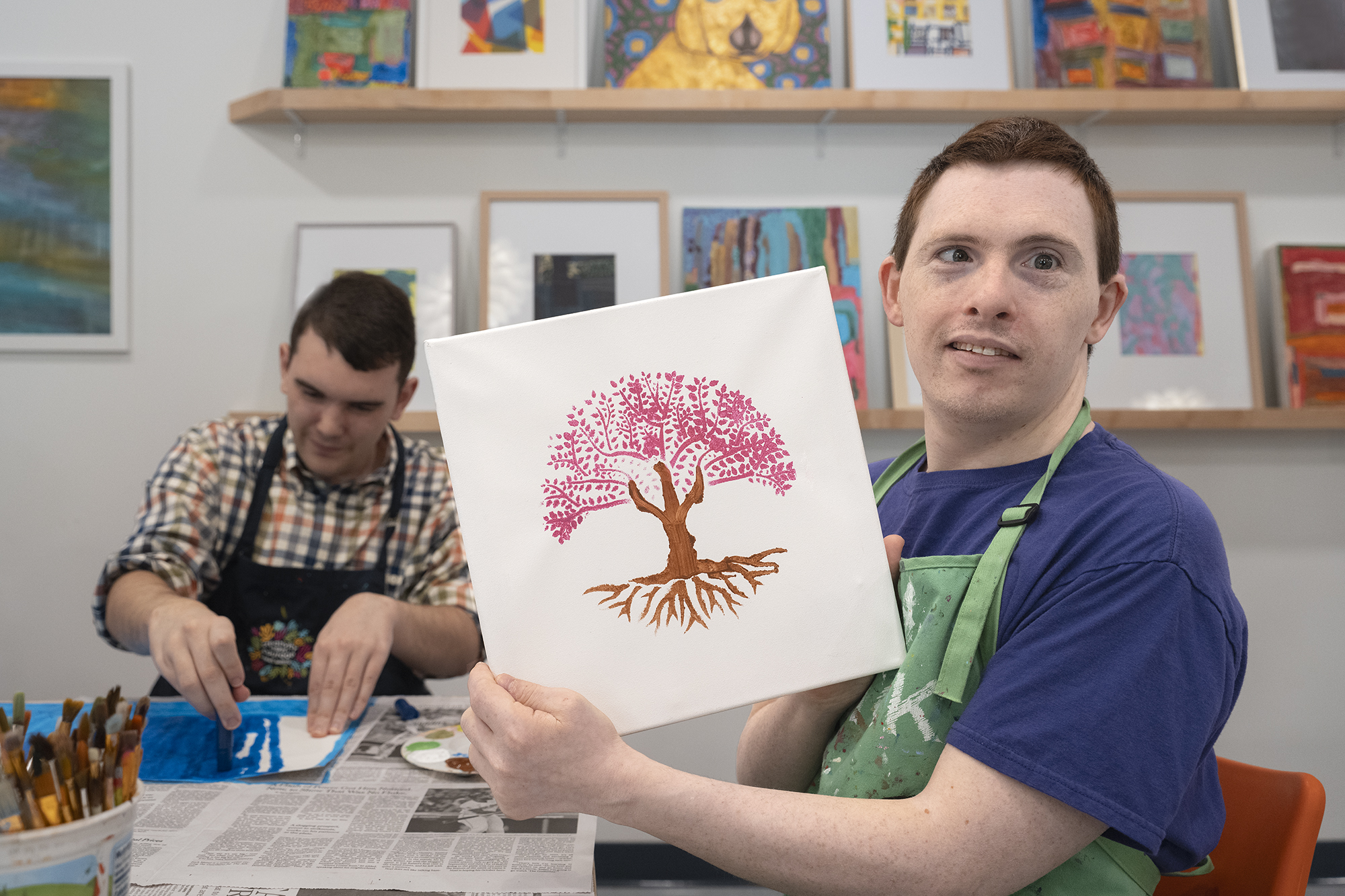
“We’re not teachers here,” she explains. “We facilitate, side by side, helping each artist develop material competencies, engage through their senses, and develop their own unique forms of creative expression.”
The results have been extraordinary.
Families reported transformations they hadn’t anticipated. One artist who communicates through sign language began signing “Wow! Beautiful art!” at her own finished paintings, a gesture of pride and recognition. The parents of Julie, another artist, were told by a doctor that their newborn would never speak. She has since delivered two public artist talks.
“Her family doctor didn’t know she was an artist until she was in her 50s, when she started making art here,” Keenan-Amago says. “When it’s really open-ended and driven by the artists themselves, it blows the roof off every ableist belief about creative capacity.”
The studio’s rapid growth caught the attention of the Joseph & Robert Cornell Memorial Foundation, whose mission is a natural reflection of the Arc Studio’s spirit: Joseph Cornell was a celebrated artist and his brother Robert had a developmental disability. After an initial grant of $75,000 in 2023, the Foundation awarded The Arc Studio two additional grants for $100,000 each in 2024 and 2025 in recognition of both the program’s impact and its potential.
The funding has been transformative. It has allowed the studio to make community programming more accessible, hire additional staff and extend its network of partnerships with organizations across central Virginia. In December 2023, the studio moved into a significantly larger space, complete with a patio and garden, capable of welcoming up to 20 artists at a time.
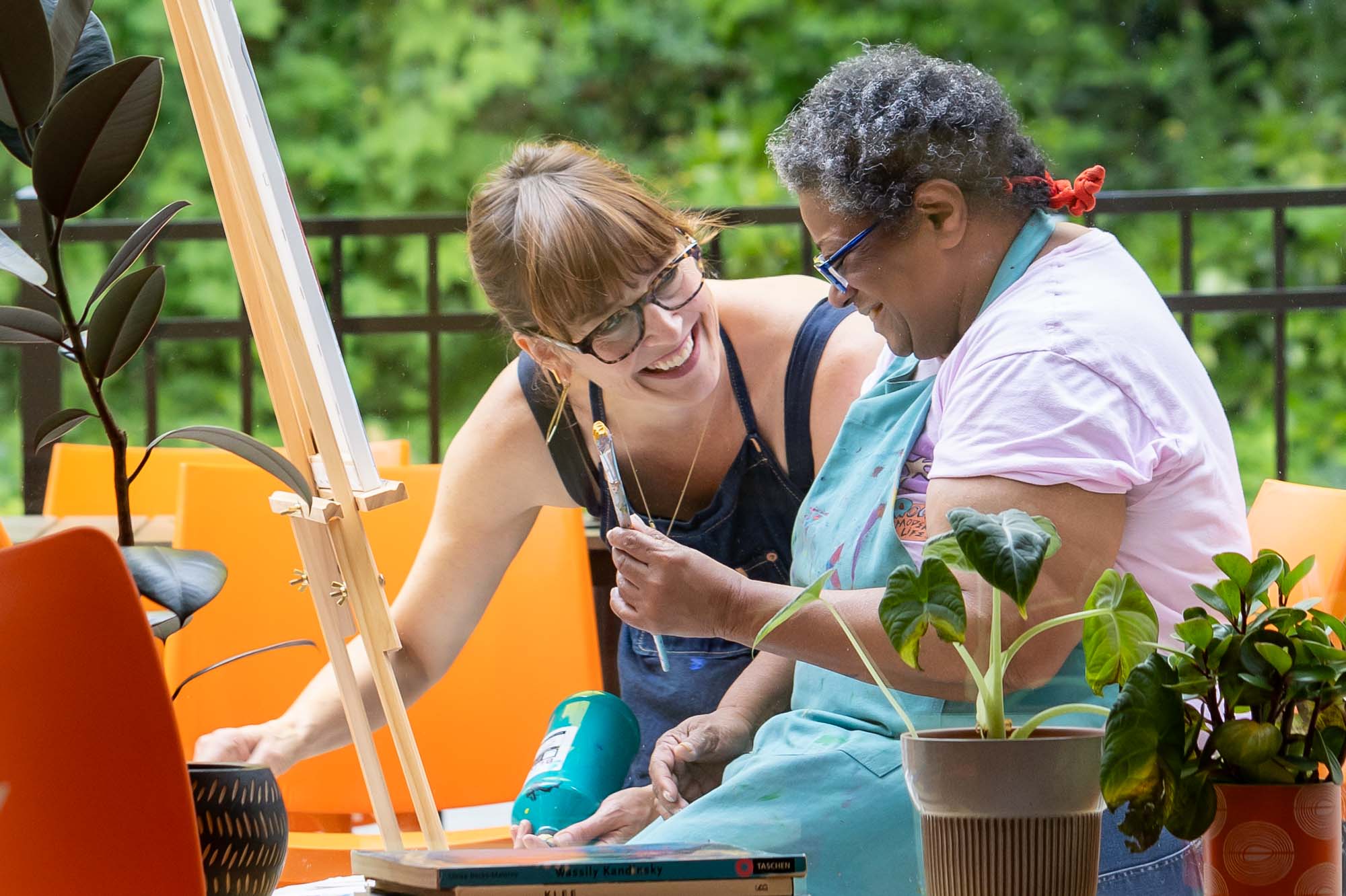
The expansion has opened doors to a plethora of new programs:
- A membership studio collective for community artists
- Partnerships with other disability support organizations
- A monthly Saturday studio for children and families
- Robust ceramics and garden programs
- A new after-school arts program piloted in 2025
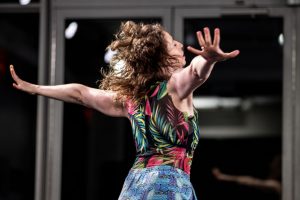
In 2026, the studio is developing programming beyond the visual arts through a new dance partnership with the Charlottesville Ballet and a pilot music program created with a disabled musician and composer.
The studio continues to attract interns from VCU and other universities along with a dedicated corps of community volunteers, which keep it vibrant with fresh energy and perspective.
Keenan-Amago’s dissertation—“Making Art, Making Self”—explores the relationship between artmaking and identity, examining how creative engagement facilitates a profound, ongoing process of becoming. The studio is not just her externship. It is her research, her laboratory and her life’s work.
“We call this studio the joy machine,” she says. “We laugh, we make art, we tell stories. We’re all growing together.”
For VCUarts, Keenan-Amago’s story is a vivid reminder of what an arts education makes possible—not only for the artist, but for the world an artist chooses to shape.
Note: This article was written from staff interview notes in spring 2025 with current updates from the artist.