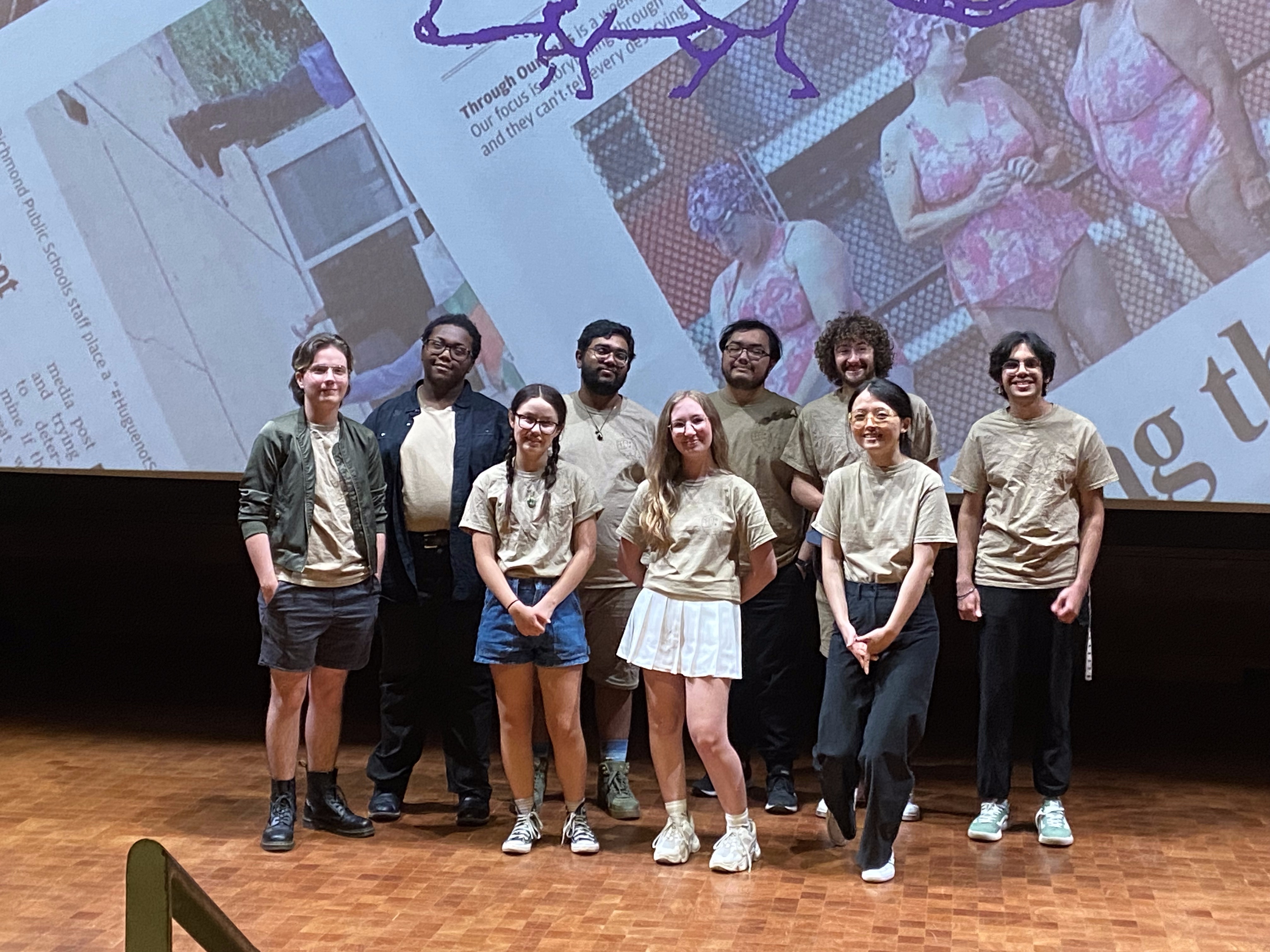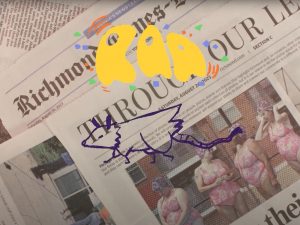
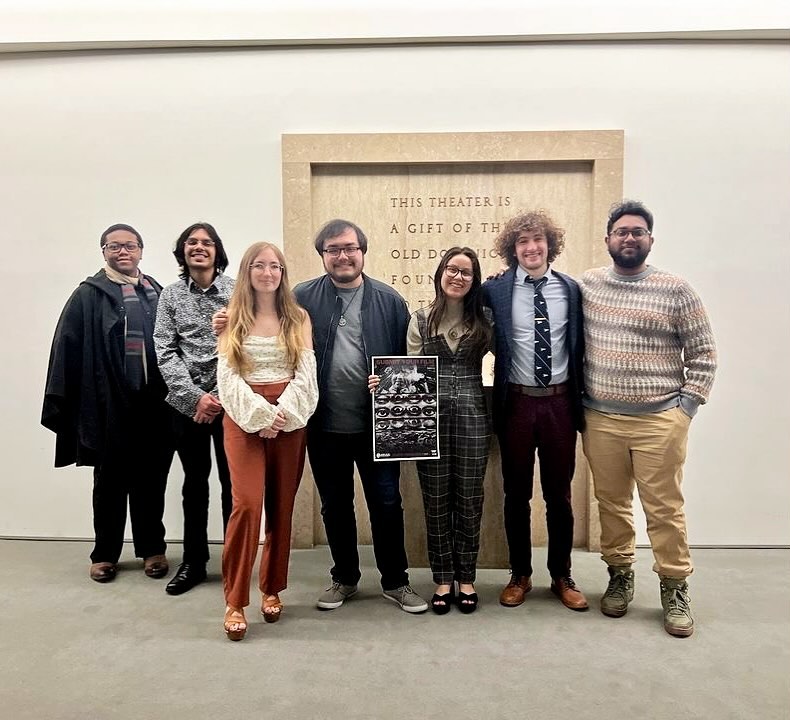
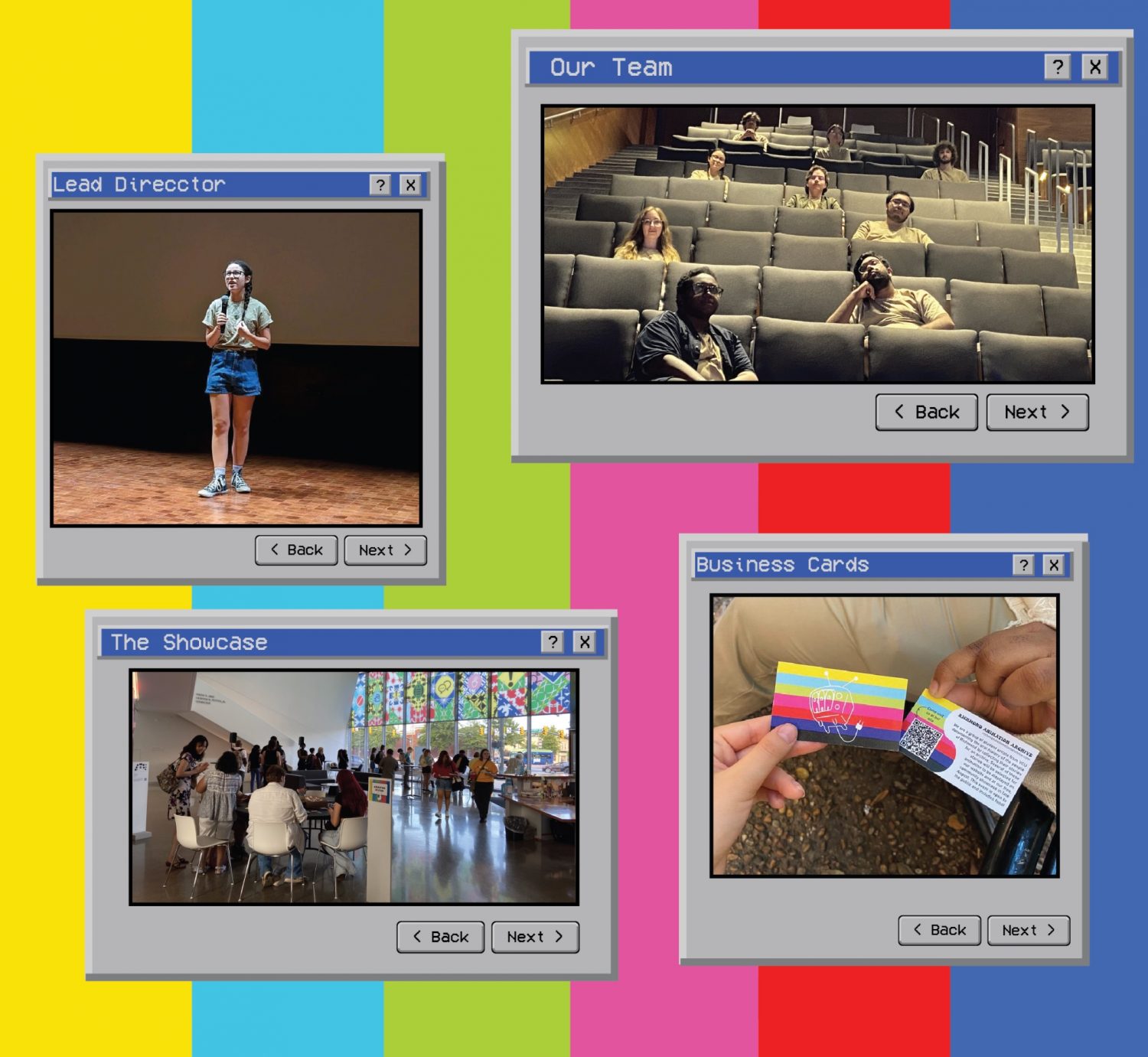
Meet the Richmond Animation Archive, a team of Kinetic Imaging majors and recipients of a VCUarts Undergraduate Research Grant. The team, lead by Kiara Brown (B.F.A. ’24), is made up of animators and videographers with the shared goal of archiving Richmond’s history. Through interviews with local residents, the team creates animations that are based on these collected stories.
The team chose animation as the medium of this project because of its ability to visualize narratives/ideas that are non-linear and artistically represent places and people that might no longer be with us. Animation has a unique ability to combine emotion with storytelling creating strong characters and narratives that connect to audiences at a core level. These local stories are from everyday people highlighting the spirit of the city and are preserved in the archive.
Administrative Affairs Coordinator, Taylor Colimore, and current undergraduate student, Nicole Strauss, spoke with the RAA team about their experience receiving an Undergraduate Research Grant to support the production of their project.
What was your preparation for the application process? Was there anything specifically challenging for you?
Ryan: I think the most challenging part of the application process was deciding what we were going to do if we received the grant. We all wanted to work on a project we resonated with and believed in; otherwise, we couldn’t expect VCU to do the same. However, everyone had their own personal goals they wanted to accomplish through the grant, so deciding on a project that would fulfill the needs of everyone on our team was tricky, as was ensuring that our project was possible under the grant’s guidelines.
Patrick: We started the way all projects generally do. A lot of brainstorming to figure out a theme that we all resonated with and such. I think it was a bit difficult trying to figure out our scope, as well as what was possible to achieve individually and collaboratively.
Kiara: I’d say one of the biggest challenges we had was putting together the actual grant proposal since that was something we had never done before. It’s not a difficult process, but it’s something that is hard to approach without some kind of mentor– things like writing style and how to justify asking for money. Luckily, one of our professors (Mireille Heidbreder) in KI had written many grants and was able to help us with these sorts of technicalities, even up to the last minute. It was invaluable support.
What was your connection to the faculty member and how did they support your project?
Sarah: A lot of our group focused in 3D animation and grew close to Semi Ryu, she always supported us in our projects so we knew she’d be perfect for our grant project. Additionally Semi’s personal artistic work aligned with what the RAA wanted to accomplish. Her project SentimentVoice focused on interviewing immigrants and showing their emotional journey through a 3D modeled and coding visual experience. So when we reached out to her about interviewing local Richmonders she was happy to help out.
Kiara: A lot of people in our group were focused on 3D animation. I was not, but had taken a 3D art class with Semi Ryu during my first year in KI. We chose Semi as a mentor for us due to almost all of us having some kind of relationship with her as well as her involvement with her own storytelling based work. We felt this tied in well to our own project. You can’t submit to this grant without faculty support and Semi was very gracious in not only sponsoring us, but also sponsoring us pretty last minute. We had regular meetings with Semi during the course of our project and she helped us get into contact with other artists and people in the community who could help us out. We found people were more likely to respond when Semi was on the emails with us. We definitely couldn’t have done this without her.
How did receiving this grant make your project possible?
Zachary: The grant freed us up to focus on the major goals of our project rather than the logistics. We wanted to be able to go to the people, and we wanted our project to culminate in a community event. The funding and resources we received through VCU made all of that possible.
Sarah: It allowed us to put on an event together for the community. We wanted to bring Richmond together with food, activities, and a screening of our project. We were able to get a venue and cater the event with the grant funding.
Patrick: The money that VCU provided paid for the food, space, and the crafts that were provided at the event, which really bolstered our community focused theme.
Kiara: Our project had three main parts. We interviewed people, turned their stories into animations, and then presented these stories at a “Community Animation Night” we hosted at the end of the grant project. The first two parts of the project we were able to purchase any kind of supplies we needed which allowed us to experiment with different mediums for the animations than we usually got to work in. This allowed us to be more creative in a kind of “sky’s the limit way” whereas usually we would try to use mostly free materials. Most of the money went toward hosting our “Community Animation Night” which was a free event we hosted for the public at the ICA. We screened the animation for the first time and provided free food and animation related crafts for the community– over 150 people came. This really helped emphasize the community focus of this project.
Uday: We were motivated. The most important part of the grant was not that we interviewed people, collected stories, created an archive, hosted a gathering where we screened our final and provided food. The most important part is that we did it. Whether we were going to get results or not, as soon as we got that grant, we were committed, motivated, and thrilled at an opportunity to express ourselves the way we wanted to. Before receiving the grant, this opportunity was just an idea. However after receiving the grant, the idea became physical.
What was your experience like creating this project with students from different majors?
Sarah: Since we were all artists it allowed us to combine our styles together. We mixed photography with animation, had a soundtrack created for the whole piece, and created graphic title cards for each segment. Everyone was able to use their strengths and get help for some of their weaknesses.
Kiara: I think most of us were in the same major, but all had different concentrations. KI is such a wide major it’s rare to have two people with the same focus. This helped with the varied styles and mediums of our animations– we had 2D drawn, 3D modeled, stop-motion, collage and many other styles of animation. We also had videography, photography and various sound and music work. Overall, I think everyone got to explore at least one thing they were interested in, if not more. And I think that us all being different styles of artists made for a much more interesting final piece that also reflected the differing natures of the stories we collected.
Uday: This project had a lot of multimedia use because the artists who worked on it had different interests, styles, and experience. This grant gave us the chance to share our experience with others, especially in forms we were uncomfortable with. I did a lot of video editing for this grant but before we started, I had minimal use of adobe after effects. Our group had ten of us, so if any of us had an issue or was stuck on a problem, we had a group to discuss with. We would assimilate knowledge from each other in a way that would have been different if you just practiced.
What advice would you give to students who are considering applying for the grant?
Patrick: Really give thought to your piece, analyze it thoroughly. Will this grant bring it to its complete form? And if so, how will you use that money?
Zachary: It’s important to have people in your group who are good with logistics and planning. It was great in our case having a crew of talented and focused artists with a great idea, but the whole project would have fallen apart if we didn’t also have a focused and determined project manager. The process involved a lot of planning and paperwork, and that doesn’t stop after you get the grant. You have to document transactions and purchases with grant funds, apply for approval for event space rentals, and organize the crew so everyone stays on task.
Kiara: This was a really long process from start to finish, I think at the very least over a year. Make sure you love your team and professor you’re working with and be sure you all are invested in what’s being made. It’s really a project that has so much freedom for you to explore yourself as an artist and create something much bigger than in class, but you need to have a lot of focus and organization to make it happen. Even though it was an art project, I spent most of my time organizing people and logistics like “who will we interview” and “when” and “what equipment will we need to bring” and “who will do what” instead of doing strictly “animation.” For me, a lot of the satisfaction of this project came from the end when we presented it at the “Community Animation Night” because it felt like it had a lot more impact within the community than if our final product just went on to YouTube. (which it also is, you should go watch it!)
Uday: As artists, we find it easier to express our art by ourselves. This grant was a group project, ten of us working together in various key roles. When it came to the creating part of our projects, I would not say it was easy, but it was more easier than the process to get there. I would advise future students to find proper leadership to push yourselves forward. Kiara was a great leader that organized our path well. We split into teams to interview various individuals at highly popular places like Carytown, had weekly meetings discussing step by step goals, talking to supervisors about equipment rentals and just socializing with other artists in general. It is a big step, but a great story to tell.