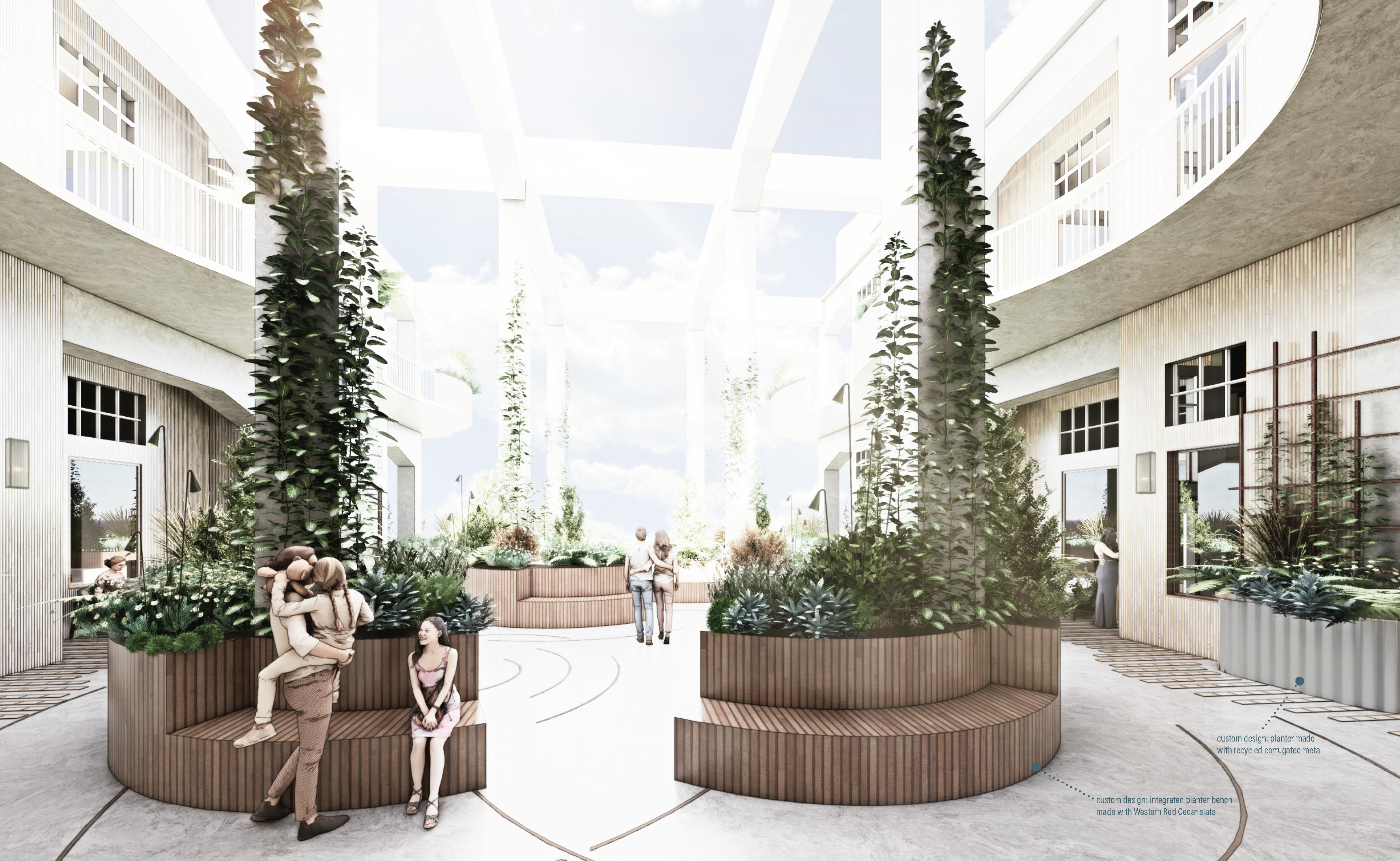
This adaptive reuse and affordable housing project, based in a 1930s concrete riverside warehouse, enhances community and individual wellbeing through evidence-based biophilic design.
Research demonstrates that biophilic design characteristics enhance wellbeing in health care facilities, which suggests great potential for application in affordable housing.
The concept of ‘ripple’ – inspired by the adjacent river and the metaphoric ripple effect of wellbeing – along with biophilic design informs all the design decisions that make up the project.
A central courtyard is introduced to the rectangular building to satisfy the primary biophilic design goals of maximising natural light, access and views of nature – providing an outdoor community space, as well as exterior access and bilateral exposure to natural light for each unit.
Indoor and outdoor plants, as well as recycled and sustainable materials – particularly those with a rippled form or texture – are specified for all spaces throughout the project, making this a thoroughly nature-centric design.