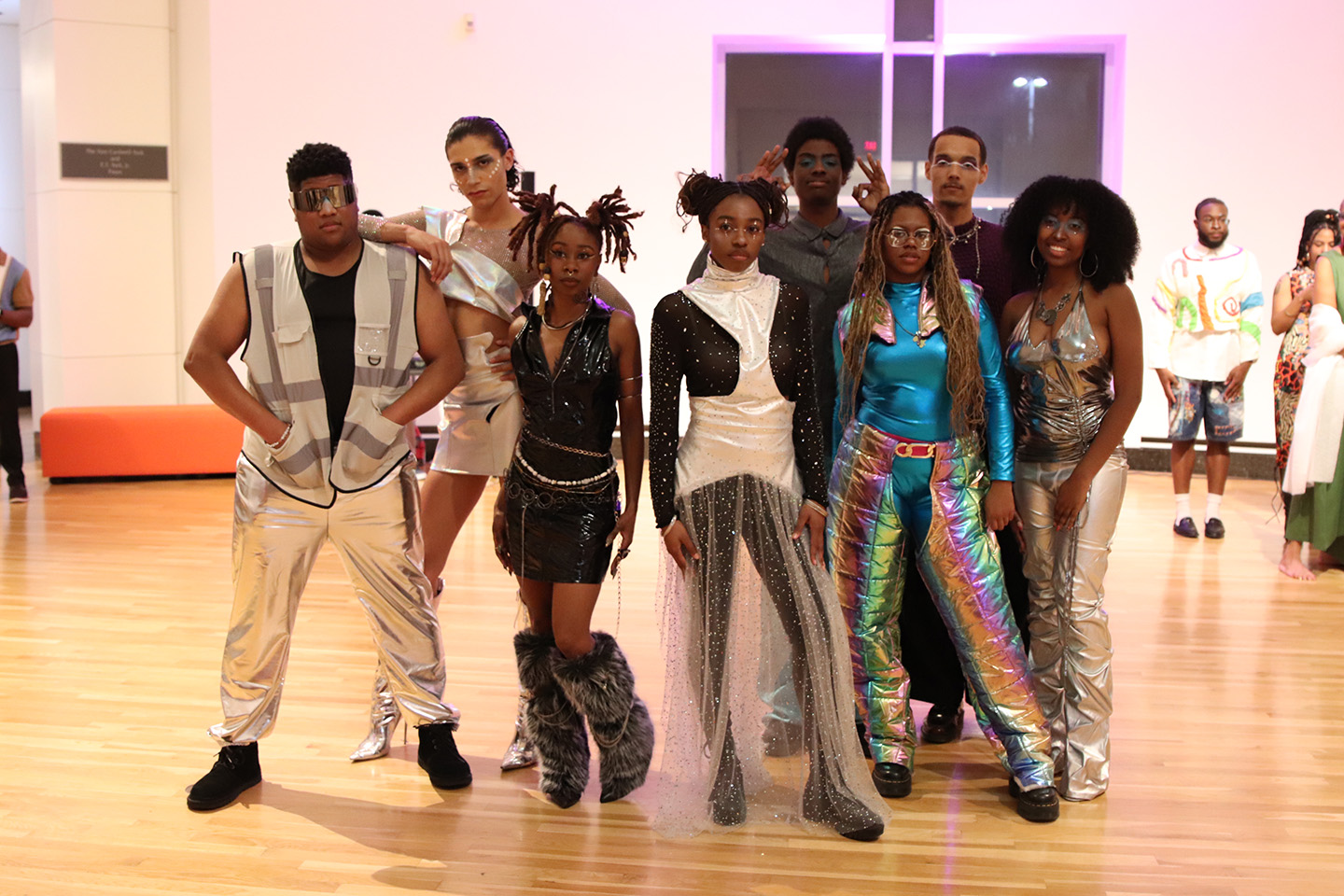
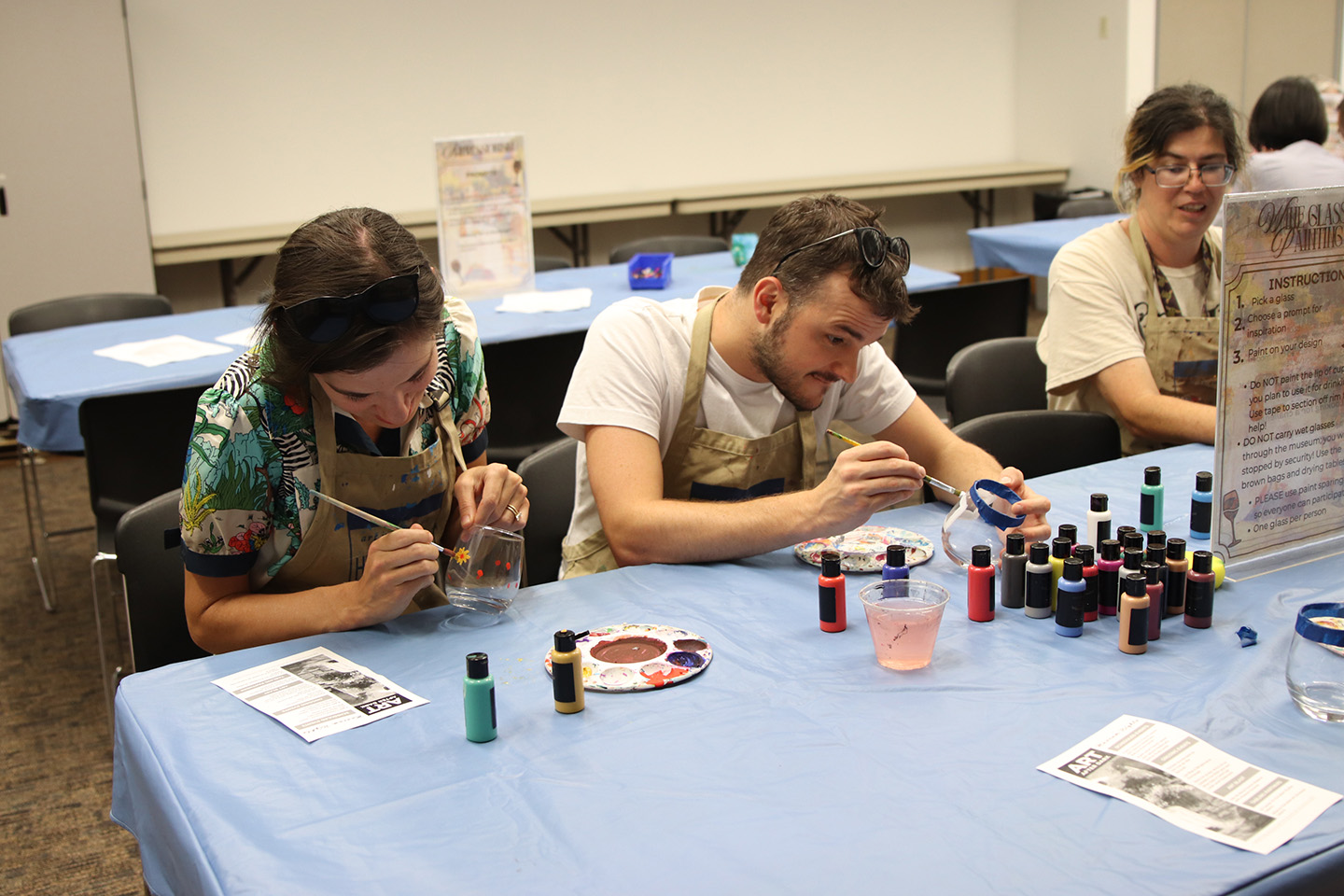
We sat down with alumnus Errol Nelson (M.A. ’22) to discuss his life after graduating. He is currently a museum professional and art historian serving as the Student Engagement Manager at the Harn Museum of Art in Gainesville, FL, where he coordinates adult museum programming that fosters artist, student, and community collaborations.
In addition to his professional roles, he is a scholar with a keen interest in the art histories of the United States during the eighteenth and nineteenth centuries. His geographical research focuses on material culture and visual arts of the Southern United States, particularly those objects made by self-liberated and enslaved persons. His most recent scholarship examines the legacy of James A. Porter (1905–1970), the pioneering Howard University professor whose advocacy for Black artists and art education continues to resonate in higher education today.
…
What is your current career and how did VCUarts prepare you for it?
As Student Engagement Manager at the Harn Museum of Art, located at the University of Florida, I lead university student engagement and public programming at the museum. A lot goes to VCUarts for preparing me for this role.
My master’s degree was Art History with a concentration in Museum Studies. Alongside the vigorous scholarly training in art history research, the museum studies track let me gain vital experience through a required internship and courses on museum education and exhibition history. I left feeling like I had a well-rounded profile when I was applying for positions post-grad.
In five words or less, how would you sum up the philosophy that guides your research and/or professional activities?
“Be a change-maker!”
What made you choose VCUarts over other schools?
I knew that VCUarts had a great reputation nationally. I was interested in getting a research degree in art history but wanted to make sure that I was keeping an eye towards my dream career as a museum professional. So, joining a program grounded in research that had a practical museology component was the best fit. Rather than a standalone museum studies degree I was able to pursue a level of research vigor that some museum studies degree programs miss out on. Sure, the name recognition is nice, but it was also the skills that I learned in the Art History department that really helped set me apart!
What themes or ideas keep showing up in your research or professional work?
One recurring theme in my praxis (philosophy+action) is the idea that meaning is not fixed, especially in the context of art and museum objects. I’m really resonating and sitting with the idea of how the “right to interpretation” can be diffused more equally rather than a single voice or narrative. Who decides? We do…together. We have a barrage of
media and images coming at us, art museums become critical in learning how to decipher what we’re seeing. I always tell my visiting students, “you can walk through a space like an NPC, or you can choose to spend your education, and your life, thinking critically about images rather than passively accepting the barrage of images and media.” Sounds lame, but art really is the start. It’s a way for us to really connect to one another as humans in a time when the world needs a lot of that for its healing.
What’s next for you? Where should we be looking for your latest activities?
You can always follow my Instagram account at @errolsculturalcanvas
Right now, I’m really excited to be doing an independent exhibition project co-curated with Anani Blakey (@anariaphy) at the local artists’ guild for this year’s Afrofuturism week. I want local Gainesville artists to engage viewers in the world they live in, hope for, and dream about. We’re showing artworks that explore world-building, cosplay, ancestry, alternate cosmologies, fantasy, and dreaming. I believe this show really demonstrates that when we pause, play, and dream we open up the space for imagining, and then building, better futures.